HOCHSCHULE REUTLINGEN

Decentralised Energy Systems and Energy Efficiency – M.Sc.

Shape the energy supply of the future with renewable energy and smart grids

Are you interested in the energy supply of the future and looking for a Master’s programme specialising in energy engineering and energy economics? Then Reutlingen is the perfect place for you. On our Master’s programme, you will develop innovative solutions for decentralised energy systems and acquire the skills needed to take on challenging roles in the energy sector, industry or research.

  • Flexible study options
    Full-time or part-time – modules held three days a week using hybrid teaching formats

  • Close to industry and practice-oriented
    Practical teaching through close collaboration with businesses and lecturers from the energy sector

  • Excellent career prospects
    A wide range of career prospects in the energy sector, industry and research – including internationally

  • Strong research focus
    Modern laboratories, application-oriented research projects and the opportunity to pursue a PhD
Your areas of focus

On the Energy Systems Master’s programme, you will deepen your knowledge of:

  • Renewable energy
  • Smart grids and intelligent energy systems
  • Energy efficiency and energy management
  • Energy storage and sustainable supply concepts
  • Decentralised energy systems and sustainable energy systems

Why Reutlingen?

  • Green Campus: Study on a modern campus with everything close at hand and a friendly atmosphere.
  • Practical networking: Benefit from partnerships with companies and projects in the energy sector.
  • Interdisciplinary and international: Six faculties facilitate exchange across disciplines.
  • Easy to reach & everything close by: The campus is easily accessible by car and public transport. Short distances, as well as a lake, an outdoor swimming pool and sports facilities right next door, ensure the best possible study conditions.

The benefits of your Master’s programme

  • Personalised support: Small study groups of fewer than 15 students enable intensive and personalised support.
  • Practical learning: Benefit from experienced professors and lecturers from the business and industrial sectors.
  • Practical projects: Develop solutions through team and project work and gain experience for your future career.
  • Partnerships with companies: Work on project assignments and Master’s theses in collaboration with partners from the energy sector.
  • International perspectives: Take advantage of courses taught in German and English, as well as exchange opportunities with international partner universities.
  • Additional qualifications and PhD: Enhance your profile with a qualification as an energy officer or prepare for an academic career.

Course content and key areas of focus

On the Energy Systems Master’s programme, you will deepen your knowledge in forward-looking areas of energy supply:

  • Renewable Energy and renewable energy sources
  • Smart Grids and intelligent energy systems
  • Energy efficiency and energy management
  • Energy storage and sustainable supply concepts
  • Decentralised energy systems and sustainable energy systems


Structure and content

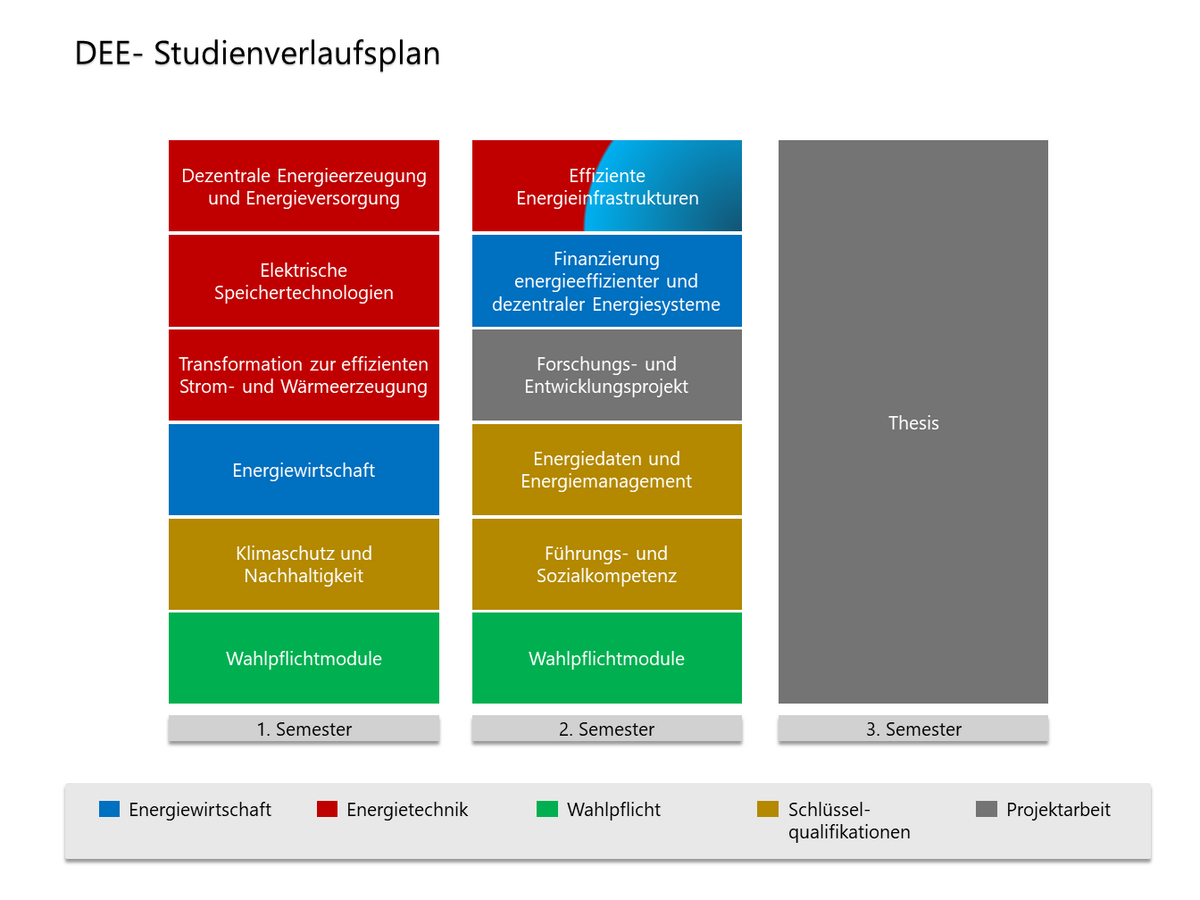
On the Master’s programme in Decentralised Energy Systems and Energy Efficiency (M.Sc.), you will gain in-depth knowledge in the fields of energy engineering, energy economics and sustainable energy systems. In the first semester, you will explore the technical and energy-economic fundamentals of decentralised energy systems, as well as key topics in energy efficiency.

In the second semester, you will deepen your knowledge of energy networks and data management, and learn about financing models for smart energy systems. In addition, you will work on practical research and development projects – for example, in collaboration with industry or the Reutlingen Energy Centre (REZ).

Through the compulsory elective modules, you can tailor your course to your individual needs and set your own areas of specialisation. In doing so, you will deepen your knowledge in the fields of energy technology and energy economics and work on current issues relating to the energy transition in a project-based manner.

In the third semester, you will apply the knowledge you have acquired in your Master’s thesis and develop practical solutions for the future-oriented topics of decentralised energy systems, renewable energies and energy efficiency.

Possible compulsory elective modules

  • Simulation and analysis of heat generation plants and heating networks
  • Simulation and analysis of decentralised electricity grids
  • Project management in the field of decentralised energy systems
  • Innovation for sustainable business practices
  • Energy Communities

Gaining international experience

The Master’s programme offers you a wide range of opportunities to gain international experience. Numerous partner universities facilitate semesters abroad and international study experiences.

In addition, international courses are directly integrated into the compulsory-elective module, for example through Blended Intensive Programmes (BIP). In the Energy Communities module, you will work alongside students from our partner universities in international courses on current issues relating to sustainable energy.

Key facts

All facts and figures for your degree programme at a glance

Admission requirements

Qualified, good or very good university degree in mechanical engineering or related technical subjects

German and English

Language of instruction

Start of studies

Summer semester: mid-March
Winter semester: beginning of October

3 or 4 semesters

Duration of studies

Master of Science (M.Sc.)

Degree

Costs

Student Union fee and contribution to administrative costs, dues to student representative organizations

Career prospects

What are the benefits of this degree? After completing your Master’s, you could work, for example, as

  • an Energy Systems Engineer
  • a Project Engineer specialising in renewable energy
  • an Energy Consultant in departments specialising in sustainable energy systems
  • a Project Manager in energy companies

CAREER SERVICE

Studierende im Labor.

Your qualification profile

After three semesters, you will have acquired the necessary knowledge and will be able to help shape change processes in the energy system as an expert in your field.

Solarpaneele auf dem Dach.

Possible fields of work

A wide range of career opportunities are available to you: project management in industrial or energy supply companies, in process and system management, in energy data management, in energy consulting or in network management.

pr-tec-krk ©

Doctorate

Interested in research? Then this master's degree is ideal for your doctorate.

Your application

Application deadlines: 31 August and 28/29 February

Learn more & apply now!


REQUIREMENTS      APPLICATION PROCESS

Apply here      ENROLMENT

1.

Carefully read the admission requirements.

2.

Apply to Reutlingen University by January 15 or July 15.

3.

Accept your place at the university.

Admission requirements

  • Qualified, good or very good university degree in mechanical engineering or related technical subjects
  • Completed university degree with at least 180 ECTS (e.g. Bachelor's degree or equivalent).
  • Please note that degrees from foreign universities must be recognised by the Studienkolleg in Konstanz.
  • Proven sufficient knowledge of German. This can be demonstrated in accordance with § 1 of the statutes on the language skills required for studying at Reutlingen University.


FURTHER INFORMATION

This is how the online application works

Register on the Reutlingen University Campus PoRTal. Once you have registered, you can apply for the Decentralised Energy Systems and Energy Efficiency degree programme.

REGISTER AND APPLY


MORE INFORMATION

This is how the enrolment works

Register for your course of study on the application portal of Reutlingen University and transfer the semester fees


More information

Frequently asked questions about the Master’s programme

From concept to approval: you will gain an understanding of the entire medical device development process – through practical, hands-on experience integrated into your degree programme. Right from the first semester, your lectures will cover real products from regional medical technology companies – including development plans, regulatory approval and change management.

During your degree, you will study renewable energy, smart grids, energy efficiency, energy storage and sustainable energy systems.

Can the Master’s programme be studied whilst working? Yes, the programme offers flexible study options with hybrid teaching formats and classes held three days a week.


You’ll benefit from the combination of cutting-edge energy technology, industry partnerships, practical projects and state-of-the-art research infrastructure.

Master for day

Experience your energy studies first-hand

You have the opportunity to get a taste of the Decentralised Energy Systems and Energy Efficiency degree programme and thus gain a real insight into the content of the programme.

Master for a day

Come to Reutlingen and get a taste of the Master’s programme in Decentralised Energy Systems and Energy Efficiency – Industrial Engineering.


REGISTER

Questions, requests, suggestions?

Head of Programme/Vice-Dean Decentralised Energy Systems and Energy Efficiency

Programme Coordination for the Master’s in Decentralised Energy Systems and Energy Efficiency

You may also be interested in the following

MSc Power and microelectronics

MSc Mechanical engineering

Msc Mechatronics